
Covering a scar with a tattoo is definitely possible. However, we recommend having this done by an experienced tattoo artist. Scars can change the texture and pigmentation of the skin, which can make the tattooing process more challenging.
That’s why we recommend scheduling a consultation first, so the tattoo artist can assess the skin beforehand. This allows them to determine which techniques will make the tattoo look its best. In some cases, multiple sessions may be needed to achieve the desired result.
Scars develop when the dermis (the layer of skin beneath the epidermis) is damaged. During the healing process, a scar is initially red. Over time, it often becomes lighter than the surrounding skin. With more severe injuries, a scar may heal thicker and with a more uneven texture.
The type of scar depends on how the skin responds to the injury. These are the most common types and their characteristics:
Atrophic scars are small, sunken pits or indentations in the skin. They often develop after acne or chickenpox, when not enough collagen is produced during the healing process.
Hypertrophic scars are raised, red, and often uneven. These scars stay within the boundaries of the original wound. They can be painful or itchy.
Keloid scars are thick, overgrown areas of scar tissue. Unlike hypertrophic scars, they can grow beyond the edges of the original wound. Keloids are more common in people with darker skin tones.
Stretch marks (striae) appear as purple-red or white lines. They are caused by the skin stretching rapidly, such as during pregnancy or a growth spurt.
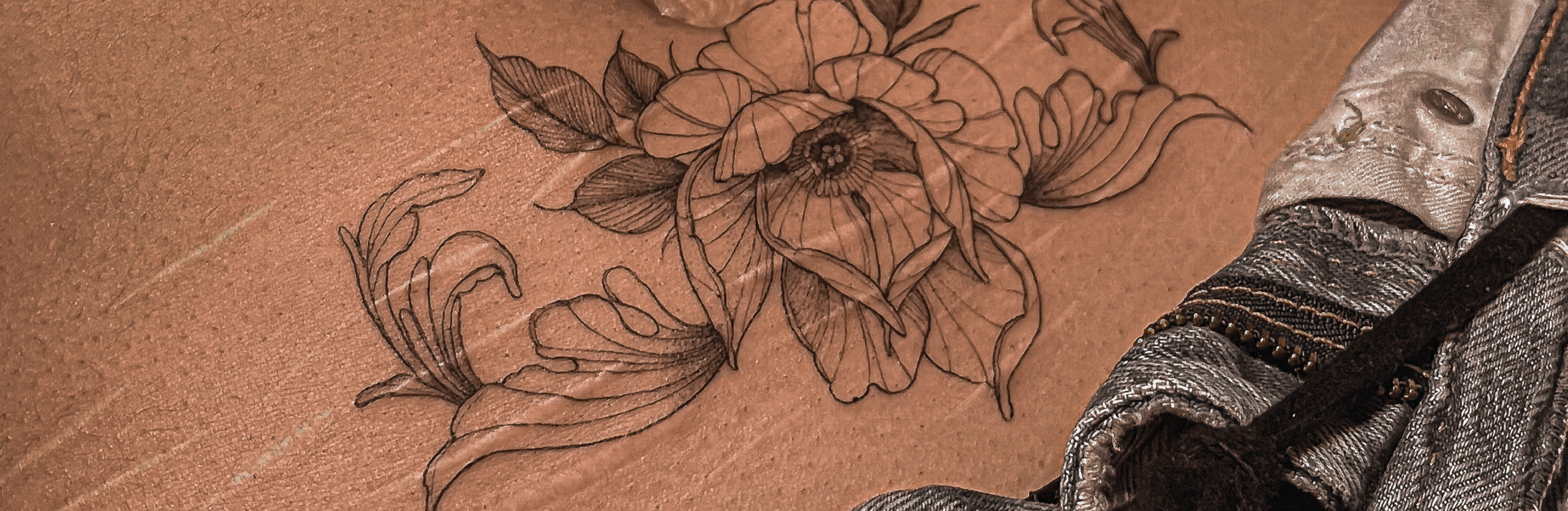
Covering a scar with a tattoo is only possible once the scar has fully healed. The longer the healing process has been completed, the better. We recommend making sure the scar is at least 12 months old, as this reduces the risk of complications such as infection.
A tattoo artist can assess whether it is possible to tattoo directly over the scar or whether the scar can become part of the design itself. As with any tattoo, proper aftercare is extremely important. Keep the tattoo clean and apply aftercare cream regularly.
Tattooing over or on a keloid scar can carry risks. Because keloids develop due to an excessive production of collagen, the tattoo needle can potentially trigger the skin and cause the scar to worsen or grow larger.
If you have keloids, it is especially important to schedule a consultation with your tattoo artist first. Together, you can discuss the possibilities and find the best approach. In some cases, a small test tattoo may be done to see how your skin responds.
Getting a tattoo is never completely painless. Pain is different for everyone, and everyone experiences it in their own way. Even when the tattoo is placed in the same area.
The sensation can be different when tattooing over scar tissue. The skin is often less smooth and more sensitive, which can make the process feel more painful. A tattoo artist can adjust their technique to help minimize discomfort as much as possible.
Want to book an appointment for a tattoo over a scar? You can do so through our artists page.