
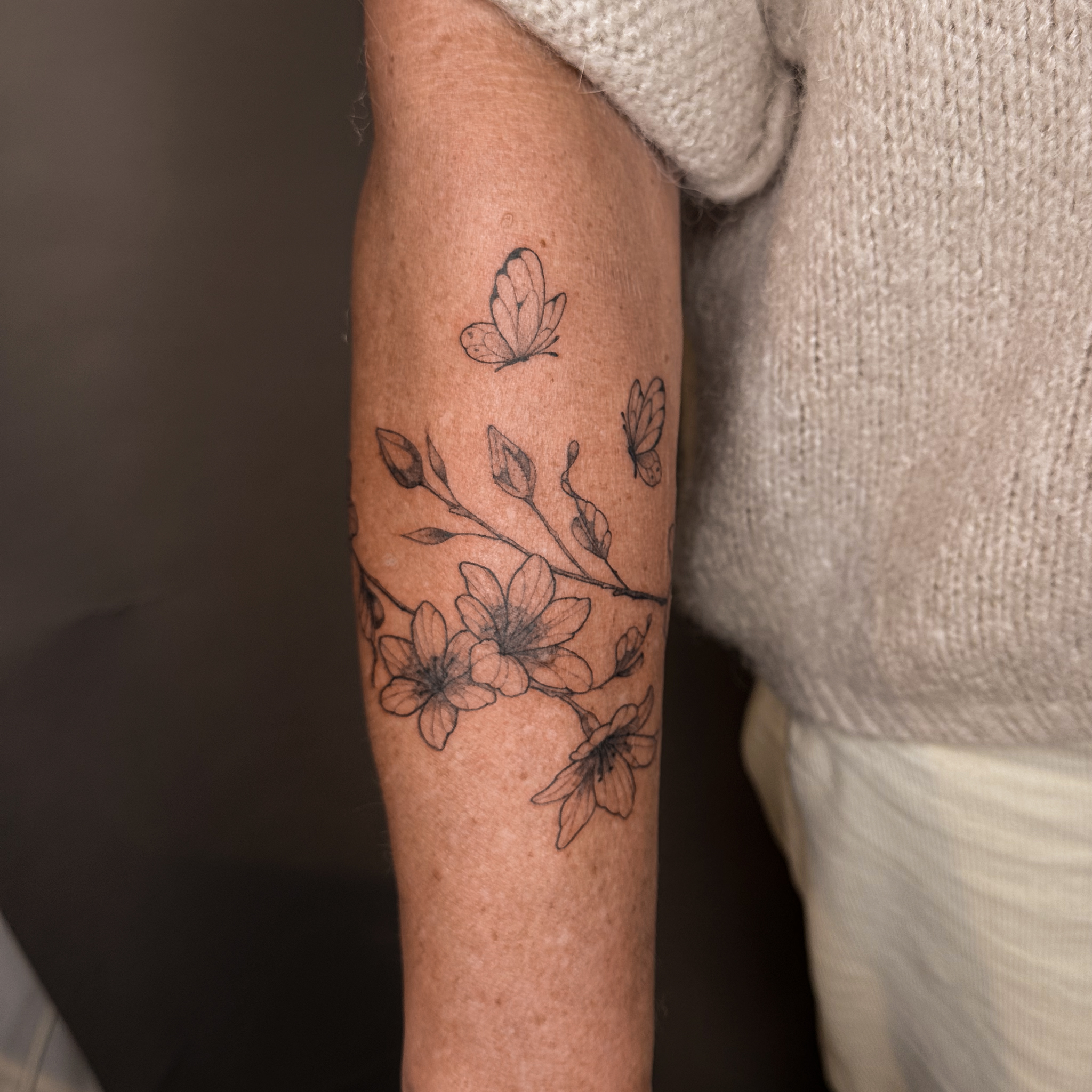
One of the best things about the rise in popularity of tattoos? People of all ages walk into our shop (legal ages only, of course 👀). Every skin type is unique, but older skin sometimes needs a little extra attention.
In this article, we’ll explain what we mean by “older skin,” what to consider when choosing designs, how to prepare, and how to care for your tattoo during healing.
As we age, our skin changes in several ways:
Less elasticity: Collagen and elastin decrease, making the skin looser and less springy.
Thinner top layer: The epidermis becomes thinner and more sensitive.
Drier skin: Older skin produces less oil, so moisturizing beforehand is essential.
More wrinkles and folds: Lines and creases make the skin less even (but not any less beautiful).
Pigment changes: Age spots and sun damage can cause uneven skin tones.
In short: tattooing older skin requires a slightly different approach than tattooing tighter skin.
We ask all our clients to prepare properly for their tattoo appointments, regardless of skin type. These tips are especially important for older skin, but really: they work for everyone:
Moisturize, moisturize, moisturize: Use a gentle cream a few days beforehand to keep skin soft. No fancy peels or scrubs needed.
Drink plenty of water: Hydrated skin takes ink better, so those 2 liters a day matter extra before your appointment. (And yes, we could all drink a little more 🙃.)
Avoid sun exposure: UV rays dry out skin and make it more sensitive. As we like saying around BlackBear Ink: SPF TO THE DEATH.
Don’t shave on the day of your appointment: Shaving can irritate skin. Do it a day before, even on areas with fine hair (like shoulders).
Skip harsh products: Retinol, strong scrubs and alcohol-based lotions should be avoided the week before. Your skin needs rest, not a cocktail of 17 active ingredients 🥲.
Working on older skin isn’t just about technique, it’s about choosing designs that hold up well over time. Some styles age better than others:
Bold lines & simple designs: Thick lines and strong shapes fade less quickly.
Black & gray: Heals more predictably than bright colors and stays readable.
Organic shapes: Curves and flowing lines “move with” wrinkles and folds, keeping the design elegant even when the body moves.
Placement matters: Tattoos look best where the skin is firmer: upper arms, forearms, shoulders, upper back or lower legs are ideal places in this case. Areas like the belly, inner arms and thighs can be trickier (not impossible of course!) due to extra folds and movement.
Older skin can take a little longer to heal, so patience is key:
Avoid friction: Clothing, bedding, and rough materials can distort the ink.
Use gentle products: Fragrance-free creams are best. Avoid scrubs and alcohol-based lotions.
Avoid sun: Fresh tattoos + UV = trouble for everybody with a tattoo. SPF TO THE DEATH!
Expect touch-ups: Older skin may lose a little ink, and a touch-up a few weeks or months later can make all the difference.
Getting a tattoo with your mom, dad, grandma, or aunt isn’t just unique. It’s a special bonding experience.
Older skin might need a bit more attention regarding design and placement, but that only makes the result more meaningful. It’s a wonderful way to celebrate generations and create a lasting memory you’ll both be proud of.
Tattoos on older skin? Absolutely possible! 💉✨
With the right preparation, thoughtful designs, and careful aftercare, anyone (at any age) can get a tattoo they’re proud of. The result? Not just a beautiful design, but a piece of art that celebrates time rather than fights against it.
share