
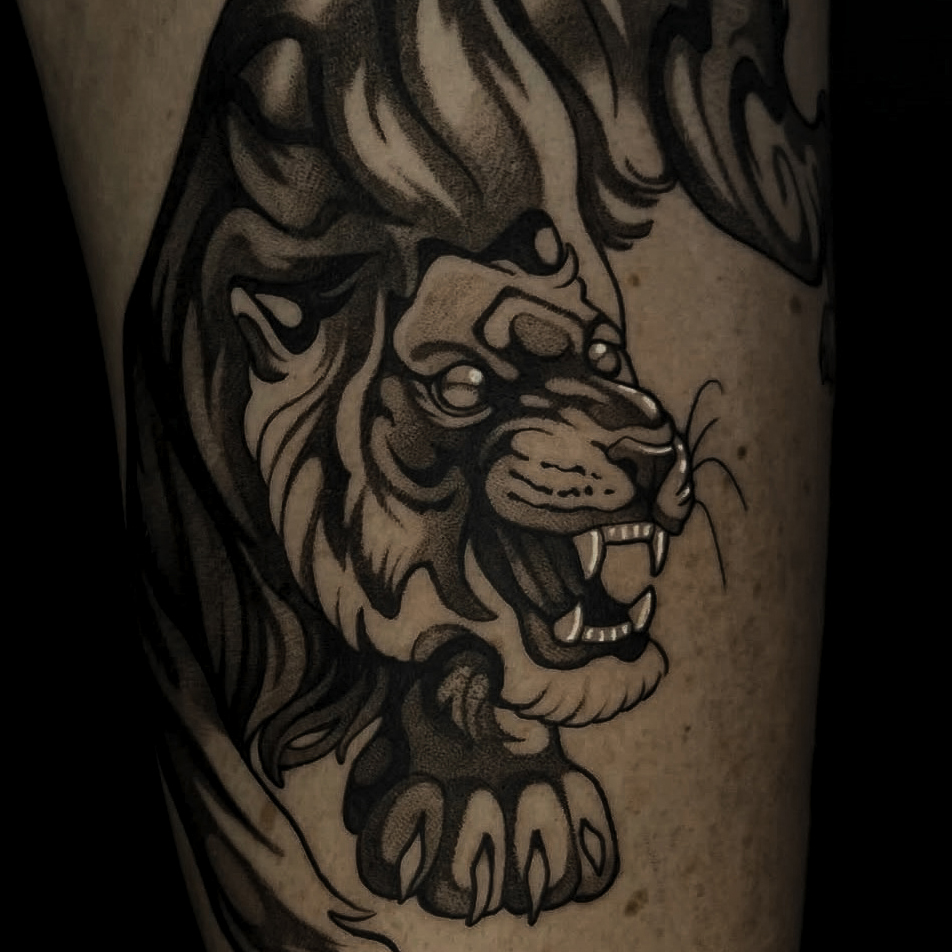
White tattoos are a bit like oat-milk fancy latte art in the tattoo world. Minimalistic. Pinterest-perfect. Subtle. Aesthetic.
However, just like that fancy latte, white ink isn’t for everyone. And in reality, it can look very different on your skin than on Instagram.
In this blog, we’ll explain what white tattoo ink really is, how a white tattoo heals, how white ink changes over time, the risks of white tattoos and when white ink is actually a good idea
So after reading this article, you can walk into our shop with realistic expectations for your next piece of permanent body art.
White tattoo ink usually contains titanium dioxide, a highly opaque white pigment also used in cosmetics and paint. At first glance, this sounds harmless. However, on skin, white ink behaves differently than black tattoo ink.
Black ink creates contrast by absorbing light. White ink does the opposite by reflecting light. And that’s where things get tricky.
Your skin also has its own pigment and undertone. As a result, a white tattoo has to remain visible without strong contrast. This means that your natural skin tone often “wins” that battle.
If you’re curious to read more about pigment and tattooing, check out our blog on tattooing darker skin.
A fresh white tattoo often looks crisp and clean. Almost like it was drawn with Tipp-Ex (for younger readers: a toxic-smelling correction fluid).
However, it’s important to note that white ink reflects light instead of absorbing it. This means that how your white tattoo looks depends heavily on lighting conditions, skin texture, skin tone and surroundings.
For example, in bright light, a white tattoo can almost disappear, while in shadow it may appear more visible. Meanwhile, photos often make it look different than in real life.
And that’s not all. Titanium dioxide reacts more strongly to UV light than black ink. This means that a white tattoo can over time:
Change color
Oxidize
Take on a cream or yellowish hue
If you thought we were over-the-top about sunscreen… with white ink, it’s a whole other level.
So if you’re considering a white ink tattoo, keep these risks in mind:
White tattoos often fade faster than black or colored tattoos, meaning more frequent touch-ups which are usually not free.
UV exposure can give white ink a yellow or cream hue. In fact, tanning beds + white tattoo = almost definitely a recipe for disaster.
Titanium dioxide can rarely trigger a skin reaction. It’s uncommon, but the risk is slightly higher than with black ink.
Because white ink creates little contrast, it may be barely visible on darker skin after healing.
Please note that none of the above has to do with an artist’s abilities. It’s simply a property of white tattoo ink.
Yes, despite all of the above, we love white ink. But only if used smartly.
White ink usually shines more as an accent than as a full standalone tattoo. For example:
✨ Highlights in a colored tattoo
🔥 Details in blackwork designs
🖤 “White over black” effect (white ink over a black tattoo for subtle contrast)
🎨 Delicate accents that don’t take center stage
This is when white ink really comes to life.
Think of white ink like salt in a dish: perfect as a touch, not ideal as the main ingredient. If you’ve ever swallowed a mouthful of seawater by accident, you know what we mean.
Social media mostly shows freshly healed white tattoos under studio lights with filters.
However, what you rarely see is a white tattoo after three summers, two vacations, and one forgotten SPF.
And that’s exactly why we wrote this blog.
Not to ruin your dream, but so that five years from now, you’re still happy with your tattoo.
Still unsure if white ink suits your skin type or design? Or have any other tattoo questions?
At BlackBear Ink, we hold walk-in sessions every two weeks at our Utrecht and Eindhoven shops. You have the opportunity anything about tattoos (not just white ink), risks, healing, or design choices.
Follow our Instagram to stay updated on walk-in dates.
We always give honest advice- even if that means telling you “maybe don’t do exactly what you pinned on Pinterest.” 🖤
share